Sweden's Licensing Rules Shape How Payment Gateways Handle Real-Time Jackpot Payouts in App-Based Live Tables
Taylor Baumann · Oct 16, 2026

Sweden's Licensing Rules Shape How Payment Gateways Handle Real-Time Jackpot Payouts in App-Based Live Tables
Sweden maintains a strict licensing system through the Spelinspektionen that directly influences how payment gateways process instant jackpot distributions in mobile live dealer environments, and operators must integrate specific technical controls to maintain compliance while supporting seamless transactions. These rules require real-time verification of funds before any payout can occur, which means gateways connect directly to licensed operator databases and player accounts to confirm eligibility within seconds of a jackpot trigger. Data from industry reports shows that such integrations reduce processing delays but demand robust encryption standards that align with national security protocols. Observers note that app-based live tables often feature progressive jackpots linked across multiple sessions, and Swedish regulations stipulate that payment systems must handle these payouts without interrupting ongoing gameplay. Gateways achieve this through API connections that trigger instant balance updates, yet they also log every transaction for audit purposes under the licensing framework. Researchers at various European institutions have examined similar systems and found that mandatory reporting intervals create additional layers of data management for providers.Licensing Requirements for Payment Integration
Under current Swedish law, any payment gateway operating in the licensed market must obtain separate authorization that verifies its ability to support instantaneous transfers while adhering to anti-money laundering checks, and this process involves testing environments where real-time jackpot scenarios are simulated repeatedly. Operators who partner with these gateways report that compliance audits occur quarterly, which ensures ongoing alignment with rules that prohibit delayed payouts exceeding predefined thresholds. Figures from regulatory filings indicate a steady increase in approved gateways since the licensing regime expanded, reflecting adaptations in software architecture.
Payment providers incorporate features like automated tax deductions where applicable and instant notifications to players, all while maintaining audit trails that Spelinspektionen can access on demand. Those who have studied these implementations point out that gateways often use redundant servers located within the EU to meet data residency expectations tied to the licenses. And this setup allows for failover mechanisms that prevent payout interruptions during peak activity periods in live table applications.
Technical Adaptations in Real-Time Payout Systems
Real-time jackpot handling requires gateways to interface with random number generators and game servers in ways that confirm wins before funds move, and Swedish rules enforce strict separation between game logic and financial processing to minimize errors. Gateways deploy tokenization methods for player data, which protects sensitive information during the brief window when a jackpot notification arrives and the transfer executes. Studies from academic sources reveal that these protocols have lowered dispute rates in regulated environments compared to less structured markets.
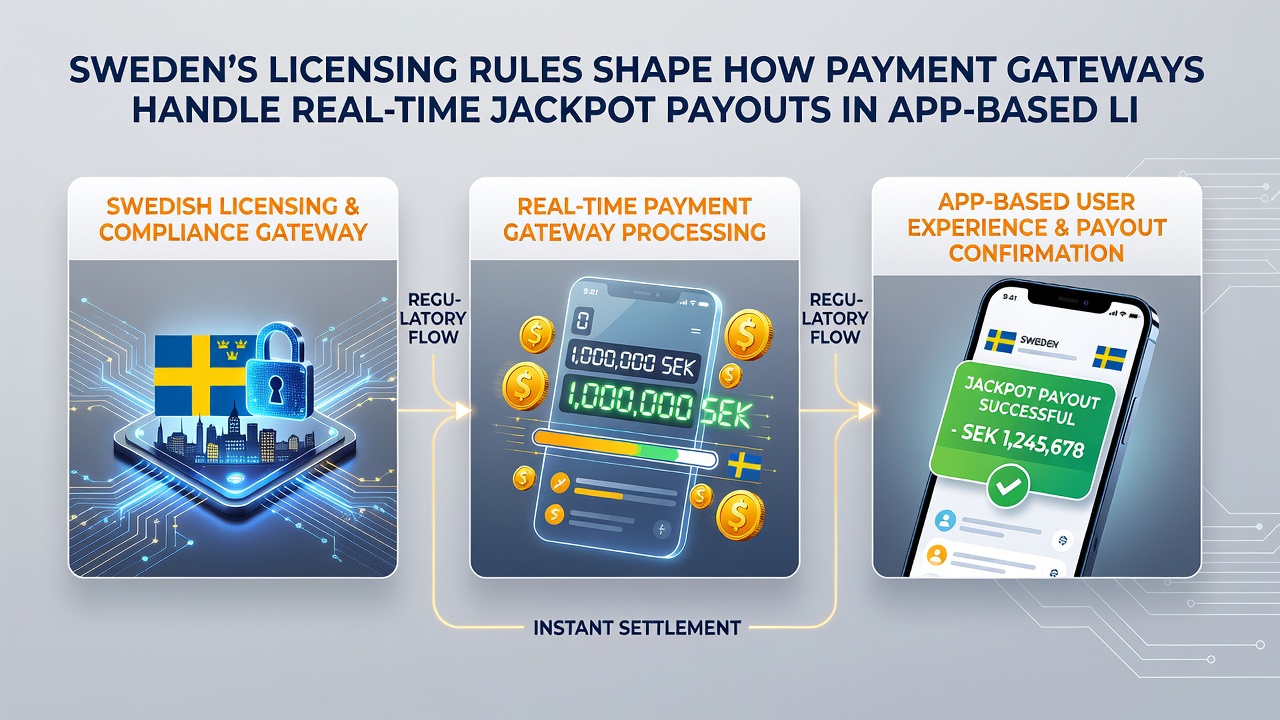
But here's the thing, the rules also mandate that gateways support multiple payment methods including bank transfers and digital wallets, each with tailored verification steps that occur in parallel to the jackpot release. Experts observe that this multi-channel approach accommodates diverse player preferences without compromising the speed of live table interactions. Data indicates that average payout times in compliant Swedish apps now sit well below those in unlicensed alternatives, driven by these integrated requirements.
Impact on App-Based Live Table Operations
App developers building live table platforms must coordinate closely with licensed gateways to embed payout triggers directly into the user interface, and this collaboration ensures that jackpot wins appear as immediate balance credits rather than pending requests. Regulations prohibit any manual intervention in the process, which pushes gateways toward fully automated solutions that include fraud detection algorithms calibrated to Swedish standards. Those monitoring the sector note continued refinements in these algorithms as operator volumes grow through 2026.
In October 2026, updated guidance from Spelinspektionen clarified expectations around cross-border data flows for jackpot networks, prompting gateways to enhance their logging capabilities further. This development aligns with broader EU efforts to standardize financial reporting in gambling, and it affects how apps handle multi-player jackpot pools in real time. Industry organizations such as the European Gaming and Betting Association have published analyses showing consistent compliance trends across member states following similar updates.
Future Directions for Gateway Compliance
Payment gateways continue to evolve their infrastructure in response to licensing stipulations that emphasize transparency and speed, with particular attention to how live table apps scale jackpot features without breaching transaction limits. Research indicates that partnerships between operators and certified providers yield more stable systems overall, as shared testing protocols identify potential bottlenecks early. Observers point to case examples where gateways successfully managed high-volume payout days during major sporting events tied to live gaming promotions.
Additional academic reviews from institutions outside Sweden highlight parallels in other regulated jurisdictions, reinforcing the value of standardized interfaces for jackpot processing. These findings support ongoing adjustments in Swedish practices that prioritize both player access and regulatory oversight.
Conclusion
Sweden's licensing framework establishes clear parameters that payment gateways follow when managing real-time jackpot payouts within app-based live table environments, resulting in integrated systems that balance speed with accountability. As operators adapt to these conditions through 2026 and beyond, the emphasis remains on technical reliability and documented compliance across all transaction stages.